THE HISTORY OF FIORENTINIThe Fiorentini story began with the ingenuity, hard work, and vision of Engineer Osvaldo Fiorentini. A personal and entrepreneurial journey spanning Italy and the world, creating one of the most recognized companies in the production of industrial cleaning machines.
The Origins: Osvaldo Fiorentini
Osvaldo Fiorentini was born on January 20, 1929, in Giugnola, a small village in the Tuscan-Emilian Apennines with only 120 inhabitants, split in two by the provincial road: half in the province of Florence and half in the province of Bologna.
His mother was an elementary school teacher for the 1st, 2nd, and 3rd grades with 50 students (today the school no longer exists due to a lack of children); his father owned a few acres of land. Osvaldo Fiorentini attended elementary school in his native village, before continuing his studies at the Salesian College in Bologna.
The Origins: Osvaldo Fiorentini
Osvaldo Fiorentini was born on January 20, 1929, in Giugnola, a small village in the Tuscan-Emilian Apennines with only 120 inhabitants, split in two by the provincial road: half in the province of Florence and half in the province of Bologna.
His mother was an elementary school teacher for the 1st, 2nd, and 3rd grades with 50 students (today the school no longer exists due to a lack of children); his father owned a few acres of land. Osvaldo Fiorentini attended elementary school in his native village, before continuing his studies at the Salesian College in Bologna.
Studies and Formative Years
When the war front stalled between Bologna and Florence, he moved to Florence to attend the Dante Classical High School, starting the school year three months later than his classmates. During that period, he supported himself by eating at the soup kitchen at the Orti Oricellari.
At the Liceo Dante, he was a student of Prof. Guerriero Grassi, who introduced him to the study of Greek lyric poets. He received a written commendation from the Headmaster for his translations of Sappho, Mimnermus, and Alcaeus.
At age 21, he was a first-year Chemical Engineering student at the University of Bologna.
The Start of the Business and Entrepreneurial Spirit
On April 16, 1950, he lost his mother, and with her, all financial support. Thanks to his benefactor and fellow villager Prof. Marsilio Bacci, he began selling textbooks and university lecture notes at religious and secular institutes in Bologna.
In those years, he edited, printed, produced, and sold university lecture notes, achieving such success that he was nicknamed “the little Hoepli”.
At age 26, he graduated in Chemical Engineering, with Prof. Manfredini as his supervisor.
The Start of the Business and Entrepreneurial Spirit
On April 16, 1950, he lost his mother, and with her, all financial support. Thanks to his benefactor and fellow villager Prof. Marsilio Bacci, he began selling textbooks and university lecture notes at religious and secular institutes in Bologna.
In those years, he edited, printed, produced, and sold university lecture notes, achieving such success that he was nicknamed “the little Hoepli”.
At age 26, he graduated in Chemical Engineering, with Prof. Manfredini as his supervisor.
From Industry to the Birth of Fiorentini
He won competitions and was hired by Pirelli, Fiat, and Esso Standard Oil—brief but formative experiences. He then spent several months abroad in Switzerland, Austria, and England to perfect his languages.
Upon returning to Italy, he joined Colgate Palmolive, where he gained deep experience in industrial processes and purchasing.
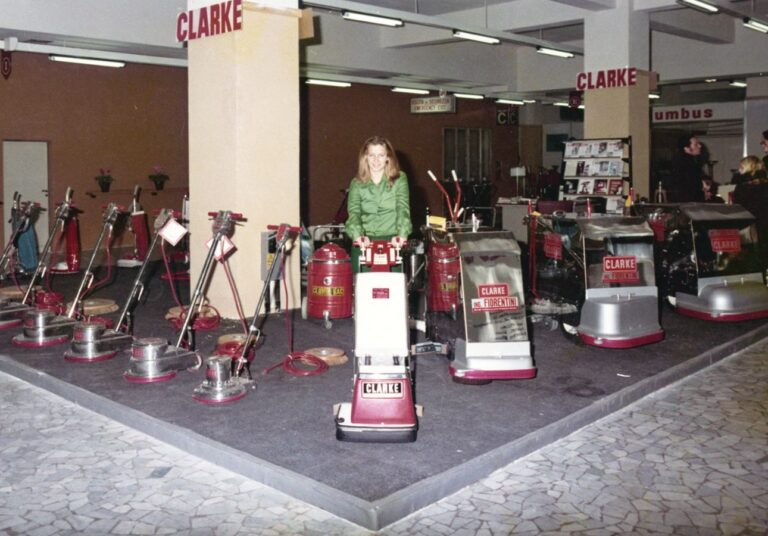
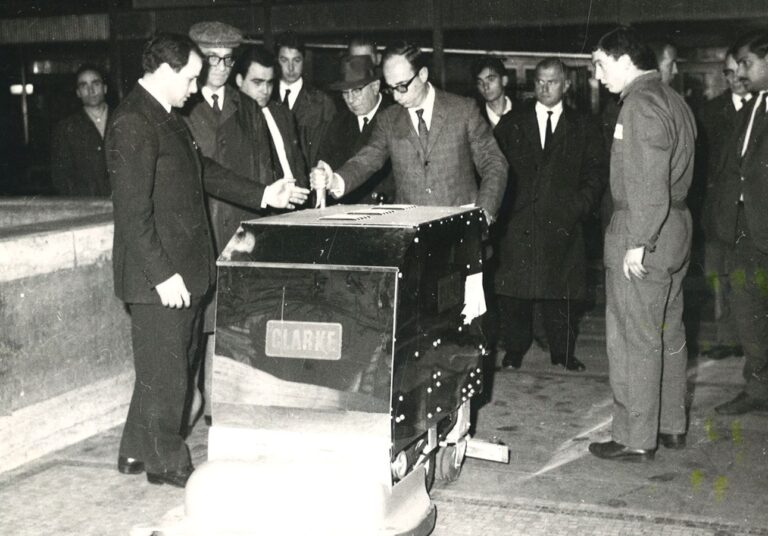
In 1961, he obtained the exclusive Italian rights for Clarke Floor Machine Co. of Muskegon (USA), a world leader in the production of cleaning machines.
International Growth
Lacking initial capital, he started the business with great financial intuition, opening a driving school in Milan that also became his first sales office.
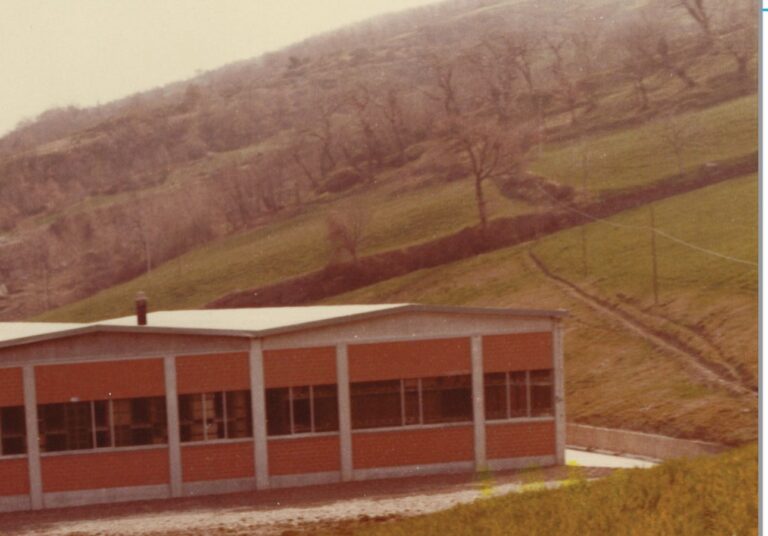
He began producing spare parts and later complete machines, even exporting to Russia. When Clarke stopped producing scrubber-dryers, he decided to produce them independently, creating the ICM 21, 24, and 32 models.
Success was immediate: containers began shipping from Italy to the USA and Canada.
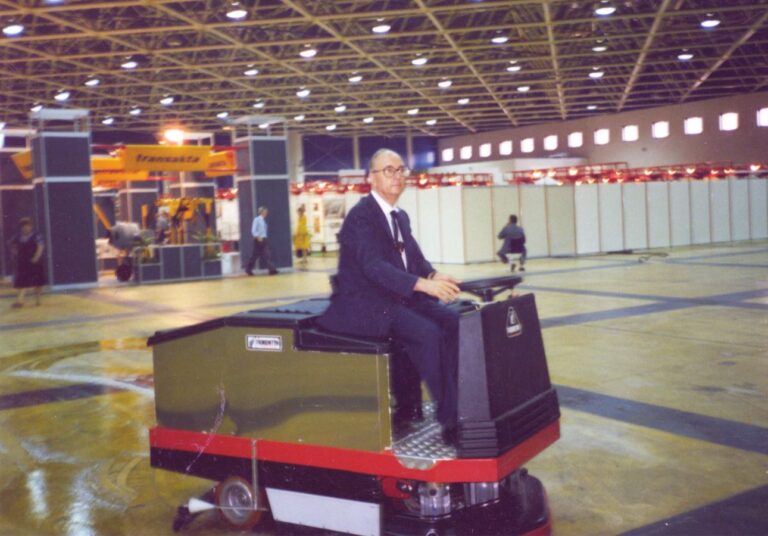
In 1980, at the ISSA Show in Chicago, he presented the first compact ride-on floor scrubber (ICM 38), attracting international attention.
International Growth
Lacking initial capital, he started the business with great financial intuition, opening a driving school in Milan that also became his first sales office.
He began producing spare parts and later complete machines, even exporting to Russia. When Clarke stopped producing scrubber-dryers, he decided to produce them independently, creating the ICM 21, 24, and 32 models.
Success was immediate: containers began shipping from Italy to the USA and Canada.
In 1980, at the ISSA Show in Chicago, he presented the first compact ride-on floor scrubber (ICM 38), attracting international attention.
Russia, China, and the World
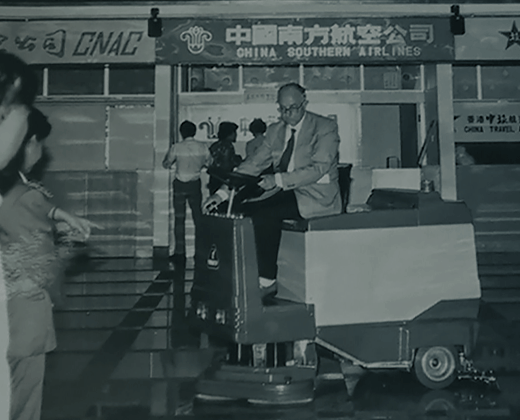
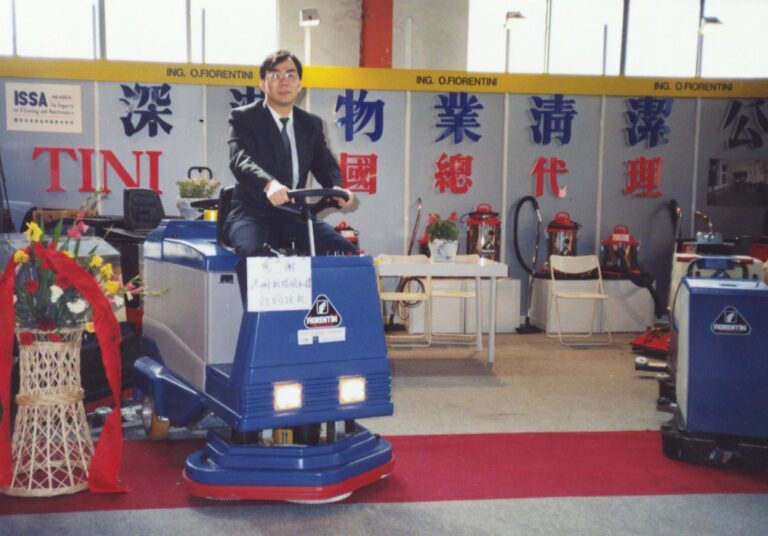
In 1985, he conquered the Russian market, and in 1989, he entered the Chinese market, opening over 15 operational centers across the country.
The Fiorentini name became synonymous with quality and reliability even in China, where it is still remembered and appreciated today.
The Great Fiorentini Family
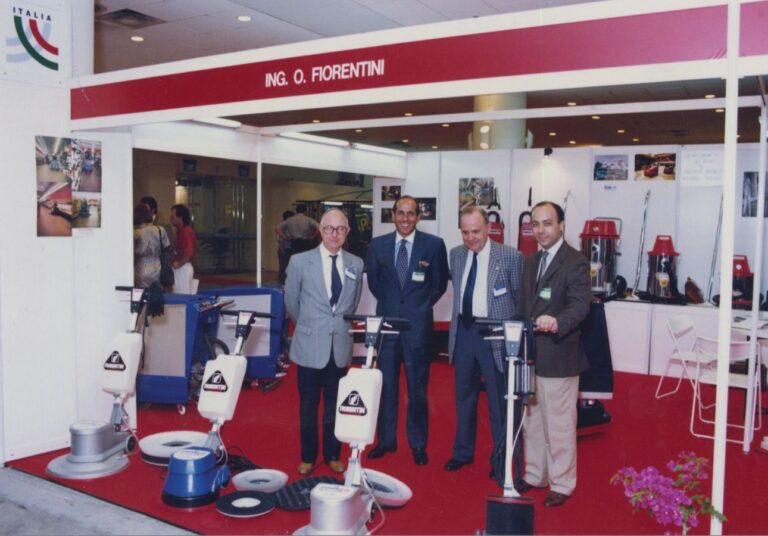
In the following years, together with his collaborators—the “great family”— new models were developed that were increasingly high-performing and innovative.
The latest creation is the ET 65, the smallest ride-on scrubber-dryer on the market.
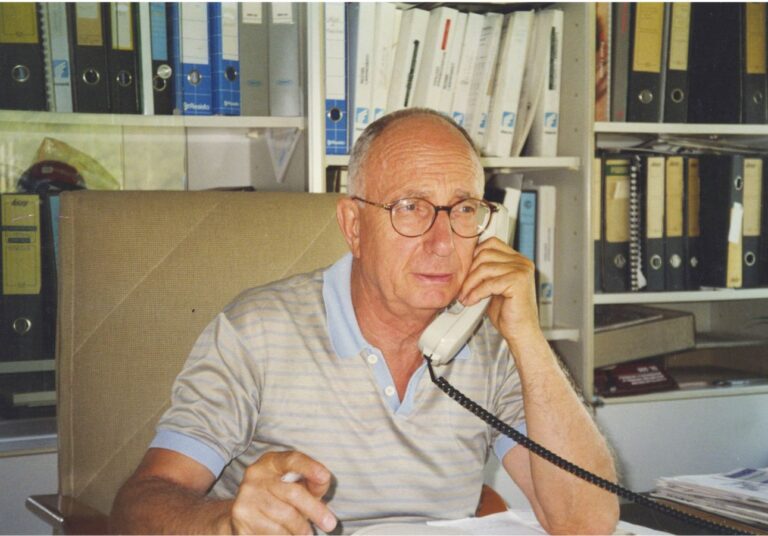
For Osvaldo Fiorentini, work has represented and continues to represent a life’s purpose.
The Great Fiorentini Family
In the following years, together with his collaborators—the “great family”— new models were developed that were increasingly high-performing and innovative.
The latest creation is the ET 65, the smallest ride-on scrubber-dryer on the market.
For Osvaldo Fiorentini, work has represented and continues to represent a life’s purpose.